

By the Numbers
By the Numbers: What Does a 2kW Heater Cost to Run?
Use dated Ofgem electricity rates to price 30-minute, one-hour and two-hour full-power heater scenarios, with thermostat and tariff caveats.

A portable heater's advertised power tells you how quickly it can use electricity while it is running. It does not, by itself, tell you the cost of leaving it plugged in for an hour or using it across a month. A Which? guide updated 25 September 2026 discusses common 2kW portable heaters and notes that thermostats can make actual power use vary. With the Calcul8 Appliance Running Cost Calculator, we can turn power × operating time × unit price into a transparent estimate.
Start with power, energy and price
2kW is a power rating: an instantaneous rate when the heater is drawing that power. If it runs at 2kW for a full hour, it uses 2 kilowatt-hours (kWh) of electricity. The arithmetic is 2 kW × 1 hour = 2 kWh. The Energy Saving Trust's energy glossary gives the same general distinction: a kilowatt-hour measures energy used over time.
To price those 2 kWh, we need a rate. Ofgem's official unit-rate table lists 26.11 pence per kWh as the average electricity unit rate for a default tariff paid by Direct Debit in Great Britain from 1 July to 30 September 2026. It lists 26.32 pence per kWh for 1 October to 31 December 2026. These are reference averages, not everyone's bill rate. Check the p/kWh figure on your own tariff for a personal calculation.
The Which? page also displays 27.69p/kWh as a “current Energy Price Guarantee” figure. That does not match Ofgem's published September 2026 average, so this article uses the dated Ofgem figures and does not repeat the Which? tariff claim as current.
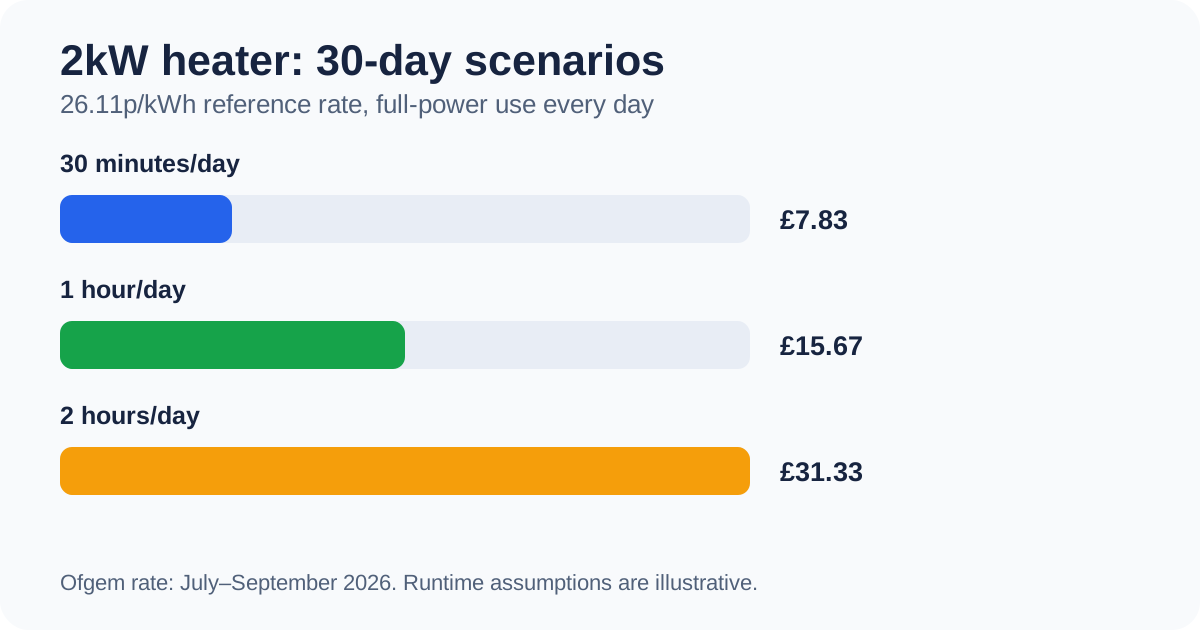
Chart note: The 0.5, 1 and 2 hours of full-power use per day are invented scenarios. They are not measured heater duty cycles or a prediction for a household.
Rebuild the hourly cost
Enter these values into the Appliance Running Cost Calculator:
- Power unit: kW; power rating: 2.
- Hours per use: 1; uses per day: 1; days per month: 30.
- Electricity unit rate: 26.11 p/kWh, the dated Ofgem reference for 1 July–30 September 2026.
The result is 2 kWh per use and £0.5222 per one-hour use, displayed as roughly £0.52. Over 30 such days, the underlying unrounded calculation is £15.666, displayed as £15.67. You may see a one-penny difference if you multiply a displayed rounded daily figure by 30; the calculator uses the unrounded rate internally.
| Full-power time per day | Energy over 30 days | Estimated cost at 26.11p/kWh |
|---|---|---|
| 30 minutes | 30 kWh | £7.83 |
| 1 hour | 60 kWh | £15.67 |
| 2 hours | 120 kWh | £31.33 |
These are marginal appliance costs. The electricity standing charge still appears on a household bill and is deliberately outside this single-device estimate. For a whole-bill scenario, use the UK Energy Bill Calculator.
What changes in October?
If the same 2kW heater draws full power for exactly one hour, the Ofgem October–December reference of 26.32p/kWh gives 2 × 26.32p = 52.64p, or £0.53 when shown to the nearest penny. Thirty such days cost £15.79. Compared with the July–September reference, that is £0.13 more across 30 days after rounding, for this appliance-use scenario alone. It is not a forecast of anyone's total energy bill.
October's Ofgem table notes an electricity VAT change, and Ofgem warns that period-to-period price-cap totals are not directly comparable on a like-for-like basis. This article compares the two published per-kWh reference figures applied to identical hypothetical use, not the full caps or the total bill.
A thermostat changes the effective runtime
Which? reports that some tested heaters varied above and below their rated output in practice. A thermostat can switch the heating element off after the room reaches its set temperature. “One hour switched on” can therefore contain less than one hour at full 2kW power. The useful input is effective full-power time, or, if you have reliable measurement, the average wattage over the period.
For example, an invented scenario with 30 minutes at full 2kW during each clock hour uses 1 kWh in that hour and costs about 26.11p at the September reference rate. This is an illustration of a 50% duty cycle, not a claim that any particular heater will cycle that way. Room insulation, outdoor temperature, thermostat setting, heater design and positioning all change the result.
Lower wattage does not automatically mean cheaper heating for the same amount of heat. A 1kW resistance heater running two hours uses the same 2 kWh as a 2kW resistance heater running one hour, before differences in controls or heat distribution. The calculator estimates electricity input cost; it does not test how comfortable the room feels or compare heating systems fairly.
A short official video on the tariff context
The Ofgem video “What is the energy price cap?” explains the price-cap idea. It does not supply this article's heater runtime scenarios. For dated unit rates and eligibility, use Ofgem's written table linked above.
Try your own numbers
Use your heater's labelled watts or kW, your best estimate of actual operating time, your expected number of days and the p/kWh rate on your own tariff in the Appliance Running Cost Calculator. Compare several runtime scenarios rather than taking the highest-power calculation as a predicted bill. The calculator's annual estimate assumes the same daily use on all 365 days; for a seasonal heater, focus on the months you expect to use it.
The UK Energy Bill Calculator adds the wider tariff context. Its standing-charge and wider-usage inputs answer a different question from the single-appliance estimate here.
This is an energy-cost calculation, not installation, electrical or fire-safety guidance. Follow the manufacturer's instructions and relevant safety advice when using a portable heater.
Sources and image note
- Which?, Cheap electric heaters for 2026, displayed 25 September 2026: heater wattage and thermostat context. Its tariff sentence is excluded for the reason explained above.
- Ofgem, energy price cap unit rates and standing charges: dated July–September and October–December 2026 average reference rates. Checked 29 September 2026.
- Energy Saving Trust, energy jargon buster: kWh definition. Ofgem's video offers general price-cap context.
- The header image is an original editorial illustration, and the in-article chart is an original calculation graphic. Neither shows measured use of a tested heater.